Tea Pot for Two: How to Choose the Right Size Without Guessing
A tea pot for two sounds like it should be one of the easiest pieces of tea gear to buy.
Then you start shopping.
One pot holds barely enough for two small teacups. Another looks almost large enough for a group.
Some come with infusers, some don't, and plenty are labeled by “cups” without telling you whether those cups are dainty teacups or the mugs sitting in your kitchen cabinet.
So instead of starting with the words for two, start with how the two of you actually drink tea.
Affiliate Disclosure: This post contains affiliate links, which means Slowly Steeped may earn a commission if you make a purchase through one of these links, at no extra cost to you. As an Amazon Associate I earn from qualifying purchases.
Start With Your Cup Size
Start by measuring how much water your usual teacup or mug holds when filled to your normal drinking level.
If you usually drink from 10-ounce mugs, you'll need about 20 ounces just to give each person one full serving. A 16-ounce teapot isn't going to work very well for that, no matter how nicely it's labeled “tea for two.”
On the other hand, if you're using smaller 6-ounce teacups, you don't necessarily need a large 30-ounce pot.
Here's a practical place to start:
| Your Usual Cup Size | Two Servings | Pot Size to Consider |
|---|---|---|
| 6–8 oz teacups | 12–16 oz total | About 16–20 oz / 475–590 ml |
| 10 oz cups or mugs | 20 oz total | About 22–24 oz / 650–710 ml |
| 12 oz mugs | 24 oz total | About 26–30 oz / 770–890 ml |
Going slightly larger than the exact amount you need gives you some room so the teapot doesn't have to be filled right to the rim.
And if you regularly go back for a second cup? You have another decision to make.
You can choose a larger pot that holds enough for refills, or use a smaller teapot and brew another batch.
For teas that can be infused several times, that second option may fit the way you drink tea better anyway.
Check the Capacity
“Two cup” and “for two” can be useful starting points while shopping, but they're not enough information on their own.
Look for the actual capacity in ounces or milliliters.
That's the number you can compare with your own cups.
This is even more important when you're buying online, where photos can make a small teapot look surprisingly substantial. Dimensions help, but capacity tells you much more about how much tea you'll actually be able to serve.
If the capacity isn't listed anywhere in the product information, that's one piece of information worth finding before buying.
Choose Your Material
Once you've figured out the size, compare materials. Stoneware and porcelain are both types of ceramic, though shops often list them separately.
Stoneware
Stoneware teapots are common choices for everyday use, especially if you like a solid, traditional-looking pot.
They're available in everything from very simple designs to colorful glazed pieces, so there's plenty of room to choose based on your kitchen or tea setup.
When comparing them, check:
whether the interior is glazed
whether the manufacturer lists the piece for food and beverage use
whether it's dishwasher safe
whether replacement lids or infusers are available
how heavy the pot is when empty
That last one gets overlooked. A heavy pot may look substantial, but remember that you'll be adding another pound or two of hot water.
Porcelain
Porcelain works well if you want lighter-looking, more traditional teaware or you're putting together a tea set.
You'll find everything from simple white pots to decorative patterns and matching cups.
If you're buying a tea pot for two as a gift, porcelain can also make sense when the recipient already enjoys serving tea with cups and saucers rather than large everyday mugs.
A porcelain option to compare: The Sweese porcelain teapot has a listed capacity of 27 ounces and includes a removable stainless-steel infuser. Two 10-ounce servings would leave some room below its listed capacity. The Sweese porcelain teapot (affiliate link)
Glass
Glass gives you something the opaque materials can't: you can see what's happening inside your tea pot.
That can be especially nice for loose leaf tea, flowering teas, or blends with colorful ingredients.
If you're considering glass, check what kind of glass is being used and follow the manufacturer's instructions for heat, dishwasher, microwave, and stovetop use.
Remember: “Glass teapot” doesn't automatically mean it's safe to place directly over a burner.
Check the Infuser
A beautiful teapot can get annoying very quickly if the infuser doesn't work well with the tea you actually drink.
Tiny infuser baskets may be fine for some teas, but larger leaves need more space once they begin absorbing water and expanding.
Look for a removable basket that's large enough to let the leaves move around rather than squeezing them into a narrow compartment.
A removable infuser also gives you an easy way to stop the steep.
Once the tea reaches the strength you want, lift the basket out instead of leaving the leaves sitting in the pot while you drink the first cup.
If the teapot doesn't include an infuser, check whether it has a built-in strainer near the spout or whether you'll need a separate tea strainer when pouring.
A spout strainer catches leaves as you pour, but it doesn't remove them from the water. If you're brewing without a removable basket, pour all the tea into your cups or another serving vessel when it's ready so it doesn't keep steeping.
A separate infuser option to compare: If you sometimes brew loose leaf tea directly in a mug, the OXO Brew Tea Infuser Basket has a wide stainless-steel basket that gives tea leaves room to expand while they steep. OXO Brew Tea Infuser Basket (affiliate link)
Check the Pour
Color, shape, and pattern are fun parts of choosing teaware.
But a teapot still needs to pour.
Look closely at the spout and handle.
A practical handle should give you enough room to grip the pot without your fingers being pressed against the hot body. The lid should also feel reasonably secure when you tip the pot forward.
Some lids have a small lip, notch, or other feature that helps keep them in place while pouring.
And take a look at the spout opening.
You don't need to analyze teapot engineering, but you do want a design that looks like it can pour cleanly without requiring you to tip the entire pot nearly upside down.
Reviews can be especially useful here. Search them for words such as pour, drip, lid, and handle instead of just looking at the overall star rating.
Those comments tell you much more about what the teapot is like to use.
Teapot or Kettle?
This is one feature worth checking every time.
A teapot is generally used for steeping and serving tea after the water has been heated.
That doesn't mean every teapot can safely sit on a stove.
Some heat-resistant glass or metal products may be designed for direct heat, but many ceramic, porcelain, and glass teapots aren't.
If you want one vessel that heats the water and brews the tea, specifically look for the manufacturer's heat-source instructions.
Otherwise, heat your water in a kettle and pour it into the teapot.
An electric kettle option to compare: The COSORI 1.7L Electric Kettle has adjustable temperature settings and several presets, which can be useful when you're brewing teas that call for different water temperatures. COSORI 1.7L Electric Kettle (affiliate link)
Check the Cleanup
A teapot with several removable pieces might be useful while brewing but slightly more work afterward.
A very narrow opening can also make the inside difficult to reach.
Before choosing one, look at:
how wide the top opening is
whether the infuser lifts out easily
whether tea leaves can get trapped around the spout
whether the lid comes completely off
whether the pieces are dishwasher safe
whether the manufacturer recommends hand washing
There's no reason your tea pot for two has to be dishwasher safe if you don't mind washing it by hand.
The important part is knowing what you're buying before the first pot of tea.
Is It Food-Safe?
If you're considering a vintage or decorative teapot, check that it's suitable for serving tea. Some ceramic glazes or decorations can release lead into food and drink.
This is especially worth checking with older pottery, handmade pieces of uncertain origin, heavily worn ceramics, or anything marked as decorative.
If a ceramic piece is labeled not for food use, leave that one on display and brew the tea in something else.
For more information, see the FDA’s guidance on lead-glazed pottery.
Do You Need the Extras?
You can find tea-for-two sets with matching cups, saucers, trays, sugar bowls, milk jugs, warming stands, and plenty of other extras.
They're useful if you'll actually use them.
They're unnecessary if what you really need is a small everyday teapot.
Matching cups can make a tea pot for two a more complete gift, but they don't improve the way the pot pours.
A warming stand may be useful for someone who sits with a pot for a long time, but it may be one more piece to store for someone who finishes two cups fairly quickly.
The extras should match the routine rather than determine the purchase.
Tea Pot for Two Checklist
Before buying, check these seven things:
Check the capacity of the cups or mugs you normally use.
Find the teapot's actual capacity in ounces or milliliters.
Choose a material that fits how you'll use and clean it.
Check the infuser if you'll brew loose leaf tea.
Look at the handle, lid, and spout, not just the pattern.
Check whether the teapot is meant for steeping only or is approved for stovetop use.
Make sure ceramic pieces are intended for food use.
Read This Next...
Ready to brew? The Tea Steeping Guide: Time, Temperature, and Better Flavor covers how much tea to use, water temperature, and steeping time.
Get Your Tea Cupboard Organized for Free
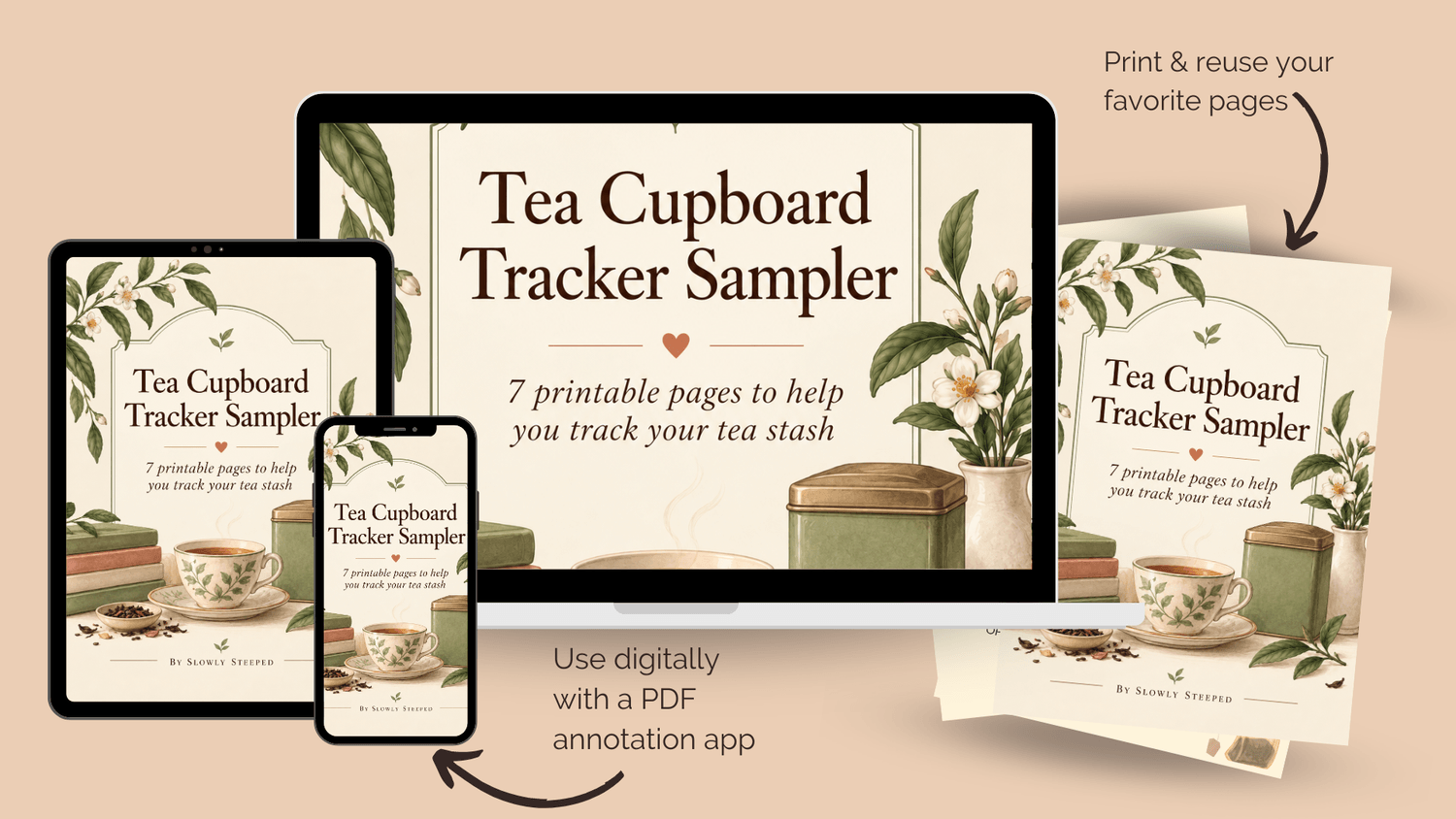
Download the free 7-page Tea Cupboard Tracker Sampler to take stock of the tea you own, see what’s already open, and decide what you want to finish next.
Tea guides, curious facts, everyday rituals, and thoughtful finds for people who simply enjoy a good cup.


Get Your Tea Cupboard Organized for Free
Download the free 7-page Tea Cupboard Tracker Sampler to take stock of the tea you own, see what’s already open, and decide what you want to finish next.
Created with ©systeme.io