The Tea Steeping Guide: Time, Temperature, and Better Flavor
You can start with good tea leaves and still end up with a cup that tastes bitter, weak, or just a little off.
Sometimes the tea isn't the problem.
It may come down to the water temperature or how long the leaves were left to steep.
Those two things can make a big difference in tea brewing. Hotter water pulls flavor from the leaves faster, while a longer steep gives the water more time to draw things out.
Go too hot or too long for a particular tea, though, and the flavor can get stronger, more drying, or more bitter than you wanted.
The hard part is that there isn't one perfect temperature or steeping time that works for every tea.
Instead of trying to memorize a bunch of exact numbers, it's more useful to know the general ranges and how to make small adjustments when your cup doesn't taste quite right.
Tea Steeping Chart
These are starting points for brewing a regular cup or pot of hot tea.
They aren’t intended for gongfu brewing, which uses more leaves and much shorter steeps.
Follow your tea’s package directions for the amount of tea and water.
| Tea Type | Water Temperature | Starting Steep Time |
|---|---|---|
| White tea | 175–185°F / 80–85°C | 2–5 minutes |
| Green tea | 160–185°F / 70–85°C | 1–3 minutes |
| Oolong tea | 185–205°F / 85–96°C | 2–5 minutes |
| Black tea | 195–212°F / 90–100°C | 3–5 minutes |
| Dark tea / pu-erh | 195–212°F / 90–100°C | 2–3 minutes |
| Herbal infusion | Around 212°F / 100°C | 3–6 minutes |
These are just starting points, not rules you have to follow exactly.
Brewing recommendations can vary quite a bit, even between tea organizations, because different teas can respond differently to heat and steeping time.
If your tea comes with brewing instructions, start there. They’re usually a better guide for that specific tea than a general chart.
Green Tea: Cooler Water
With green tea, water temperature can make a noticeable difference.
Use very hot water on a delicate green tea and you may pull out more bitterness and astringency than you wanted.
Cooler water and a shorter infusion usually give you more room to work with.
That doesn't mean every green tea needs exactly the same treatment.
A Japanese sencha may respond differently from a Chinese Dragon Well. Genmaicha and roasted hojicha bring their own characteristics too.
If you're trying an unfamiliar green tea, start around 160–170°F, or follow the brewing temperature listed on the package.
If the tea tastes weak or a little thin, try slightly hotter water the next time you brew a fresh cup.
White Tea: Adjust the Heat
White tea often shows up on brewing charts with some of the lowest temperature recommendations, but there’s actually quite a bit of variation.
Many guides suggest water around 175–185°F, while some white teas can handle hotter water just fine.
Part of the reason is that white tea can come in different leaf styles. A tea made mostly from delicate buds may brew differently from one made with larger, fuller leaves.
So if your white tea tastes a little weak at a lower temperature, try slightly hotter water or add about 30 seconds to the steeping time and taste again.
A small adjustment may be all it needs.
Oolong: Match the Style
If one tea family refuses to fit neatly into a chart, it's oolong.
Some oolongs are green, floral, and lightly oxidized. Others are darker, roasted, and much closer in character to black tea.
That means tea brewing temperatures can move around quite a bit.
A greener oolong can be a good candidate for water closer to 185°F. A darker or roasted oolong can usually handle hotter water.
If you already explored the different styles in the oolong guide, this is where those differences start becoming useful in the kitchen.
The appearance and processing style give you a clue about where to begin.
Black Tea: Hotter Water
Black tea generally does well with water near boiling and a three- to five-minute infusion.
That stronger brewing range makes sense for teas such as Assam, Ceylon, Keemun, and many breakfast blends.
But there's still room to adjust.
If your black tea tastes harsh, bitter, or leaves your mouth feeling unusually dry, try shortening the steep by about 30 seconds next time.
If the tea tastes weak or thin, with very little flavor coming through, don’t just leave the leaves steeping for several extra minutes.
Instead, try adding about ¼ teaspoon more tea per 8-ounce cup, or raise the water temperature by about 5–10°F, as long as you stay within the recommended range for that tea.
Either change can give the cup more body and flavor without pushing the steep so long that bitterness becomes the main thing you taste.
Brewing Herbal Tea
Herbal tea isn't actually made from the Camellia sinensis tea plant, so the usual green-versus-black tea rules don't transfer perfectly.
You're brewing flowers, leaves, roots, fruits, spices, or some combination of these.
That's why herbal blends often use boiling water and longer steeping times.
A peppermint infusion and a chunky fruit-and-hibiscus blend aren't identical, though, so the directions on the package become especially useful here.
Do You Need a Special Kettle?
Not necessarily.
A kettle with temperature settings makes things convenient, especially if you regularly switch between green, oolong, and black teas.
But it isn't a requirement for making good tea.
A basic kitchen thermometer, such as the ThermoPro TP19H, can help you check the water temperature before adding your tea leaves. ThermoPro TP19H
If your kettle only boils water, let the water cool before brewing teas that need a lower temperature. A thermometer can help you check when it’s ready.
There's no prize for landing on exactly 180°F every single time.
Consistency matters more than chasing one exact degree.
An electric kettle option to compare: The COSORI 1.7L Electric Kettle has adjustable temperature settings and several presets, which can be useful when brewing teas that call for different water temperatures. COSORI 1.7L Electric Kettle
Adjust Your Next Cup
When you adjust your next cup, change just one thing: the water temperature, steeping time, or amount of tea.
Keep the other two the same so you can tell what helped.
Once the steeping time is up, remove the leaves or tea bag.
Sources
1. Tea and Herbal Association of Canada — How to Brew
2. UK Tea & Infusions Association — The Perfect Brew
3. Journal of Food Science and Technology: Green Tea Brewing Study
Read This Next...
If you're still getting comfortable with loose leaf tea itself, read Loose Leaf Tea Made Easy: A No-Fuss Brewing Guide next. That guide walks through the overall brewing process, while this one focuses specifically on getting steeping time and water temperature dialed in.
Get Your Tea Cupboard Organized for Free
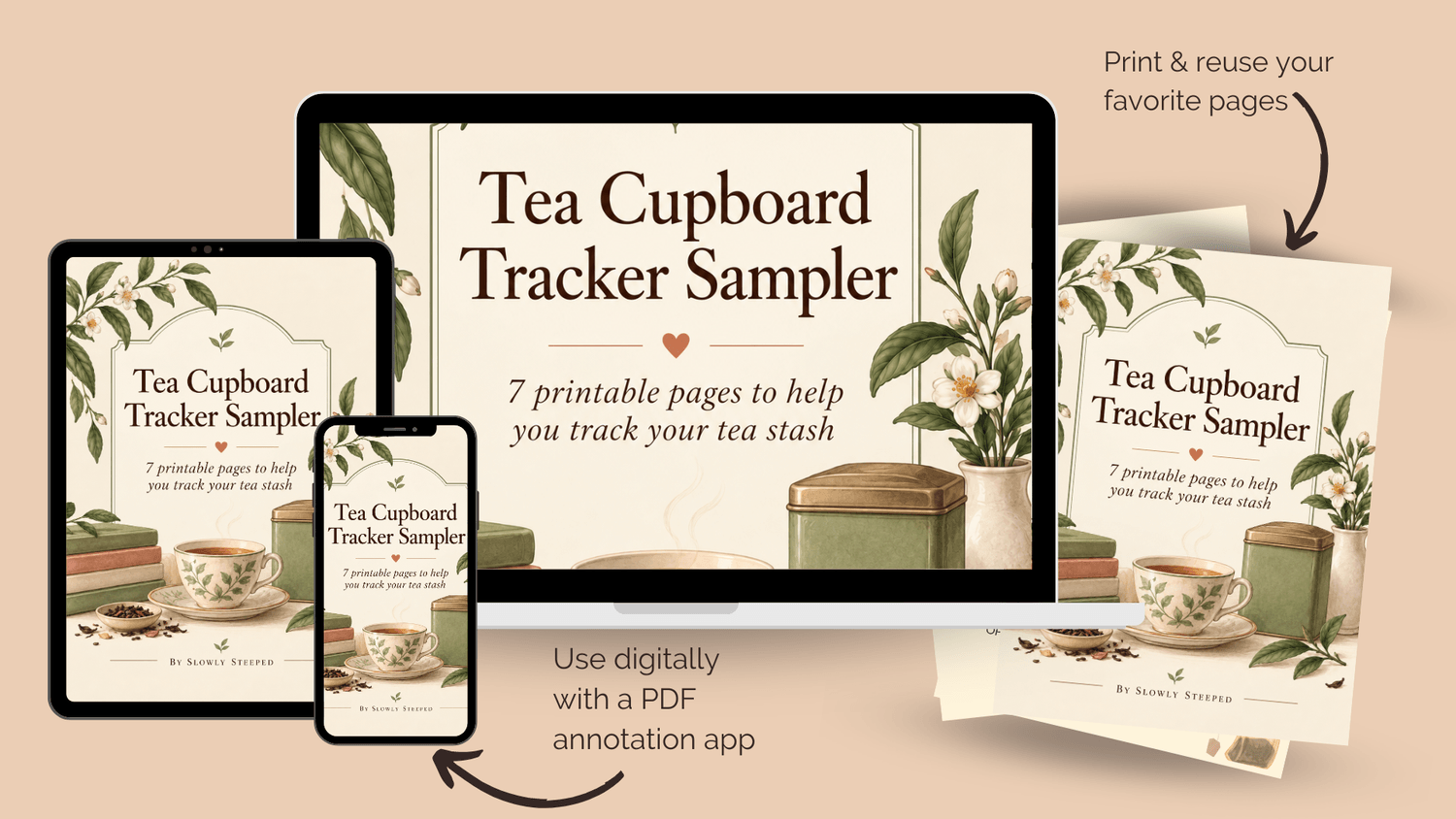
Download the free 7-page Tea Cupboard Tracker Sampler to take stock of the tea you own, see what’s already open, and decide what you want to finish next.
Tea guides, curious facts, everyday rituals, and thoughtful finds for people who simply enjoy a good cup.


Get Your Tea Cupboard Organized for Free
Download the free 7-page Tea Cupboard Tracker Sampler to take stock of the tea you own, see what’s already open, and decide what you want to finish next.
Created with ©systeme.io