
Japanese Tea Culture Beyond Matcha
When people hear Japanese tea culture, matcha tends to get a lot of the attention.
The bright green tea, bamboo whisk, and tea bowl are familiar images of the Japanese tea ceremony. But that’s only one part of a much wider tea culture.
In Japan, tea also shows up in much more ordinary ways. There’s sencha poured from a small teapot, roasted hojicha, genmaicha scented with toasted rice, tea offered to guests, and cups served simply because tea is part of everyday life.
In fact, the Government of Japan describes sencha as the most
common type of Japanese tea. Matcha has an important cultural role, but it isn't the everyday default for every tea drinker.
So if your picture of Japanese tea begins and ends with matcha, there’s quite a bit more to explore.
How Tea Came to Japan
Tea originally came to Japan from China.
The custom developed gradually, with Buddhist monks playing an important role in spreading tea cultivation and tea drinking.
Japan's Ministry of Agriculture says that tea drinking became more widespread alongside Zen Buddhism, while sencha grew in popularity later during the Edo period.
The highly structured tea tradition most people recognize today developed much later.
By the sixteenth century, tea gatherings had become important social and artistic events among Japan's ruling and merchant classes.
Tea master Sen no Rikyū, who lived from 1522 to 1591, became one of the most influential figures in shaping what became chanoyu, or the Japanese Way of Tea.
Everyday Tea in Japan
A regular cup of Japanese tea doesn't require a tea room or a carefully choreographed ceremony.
Sencha is widely consumed as an everyday green tea. Other familiar choices include hojicha, which is roasted, genmaicha with roasted rice, richer gyokuro, and many regional variations of green tea.
Tea can also function as a simple gesture of welcome.
A Government of Japan feature on Japanese tea describes sencha being offered when visiting friends and tea being served in offices and other everyday settings.
The article also explains that cha no ma, meaning tea space, is an older term for a home’s shared living area.
There's the formal tradition people travel to Japan hoping to experience, but there's also the ordinary cup poured while people sit and talk.
Matcha and the Tea Ceremony
Matcha plays an especially important role in chanoyu, the Japanese Way of Tea.
Chanoyu is about much more than preparing matcha the right way.
A formal tea gathering can include carefully chosen ceramics, flowers, calligraphy, food, utensils, and even the way the room is arranged.
The interaction between the host and guest is part of the experience too.
That’s why making matcha at home and taking part in chanoyu aren’t really the same thing.
You can absolutely enjoy whisking matcha in your own kitchen and learn a lot about the tea itself.
Chanoyu, though, is a much broader cultural tradition with its own history, etiquette, schools, and practices.
Sencha-do: Loose-Leaf Tea
Matcha gets most of the attention, but it isn’t the only tea with a formal tradition in Japan.
There’s also sencha-do.
Unlike chanoyu, which uses powdered matcha, sencha-do is built around loose tea leaves brewed in a small teapot.
The tradition started taking shape in the late 1600s and became more established during the 1700s. It developed as a different approach to tea from the more formal world of chanoyu.
Different schools of sencha-do still practice their own methods today, using teas such as sencha and gyokuro.
It’s a good reminder that when people talk about the Japanese tea ceremony, they aren’t always talking about just one tradition.
Exploring Japanese Tea at Home
A good place to start is with the tea itself.
Try sencha first, since it’s one of the most familiar everyday teas in Japan. From there, you can compare it with hojicha, which has a roasted flavor, or genmaicha, which includes roasted rice.
Matcha gives you another completely different experience because the powdered tea is whisked directly into the water rather than steeped and removed.
You can also learn about Japanese tea through the sweets served with it. In formal tea gatherings, wagashi, or Japanese sweets, often reflect the season through their shapes and colors.
If you’re curious about the more formal side of Japanese tea, look for a tea ceremony demonstration, class, or event led by an experienced practitioner.
A guided session gives you a chance to ask questions about the utensils, etiquette, and the host’s role.
Sources
1. Government of Japan — A Historical Walk Through Japanese Tea
Resource: A Historical Walk Through Japanese Tea
Organization: Government of Japan — Highlighting Japan
Read the source → Government of Japan — A Historical Walk Through Japanese Tea
2. Government of Japan — Enjoying Japanese Tea at Home
Resource: Enjoying Japanese Tea at Home — Japanese Tea Culture for the Senses
Organization: Government of Japan — Highlighting Japan
Read the source → Government of Japan — Enjoying Japanese Tea at Home
3. The Metropolitan Museum of Art — The Japanese Tea Ceremony
Resource: The Japanese Tea Ceremony
Organization: The Metropolitan Museum of Art
Read the source → The Met — The Japanese Tea Ceremony
4. Government of Japan — The Japanese Sencha Tea Ceremony
Resource: The Spellbinding Zen Spirit of the Japanese Sencha Tea Ceremony in Kyoto
Organization: Government of Japan — JapanGov
Read the source → JapanGov — Japanese Sencha Tea Ceremony

Read This Next...
If the matcha side of Japanese tea caught your attention, read Matcha Explained: What the Different Styles and Labels Actually Mean next. It explains how matcha is produced, what terms like ceremonial and culinary grade really mean, and what to look for when choosing matcha.
Get Your Tea Cupboard Organized for Free
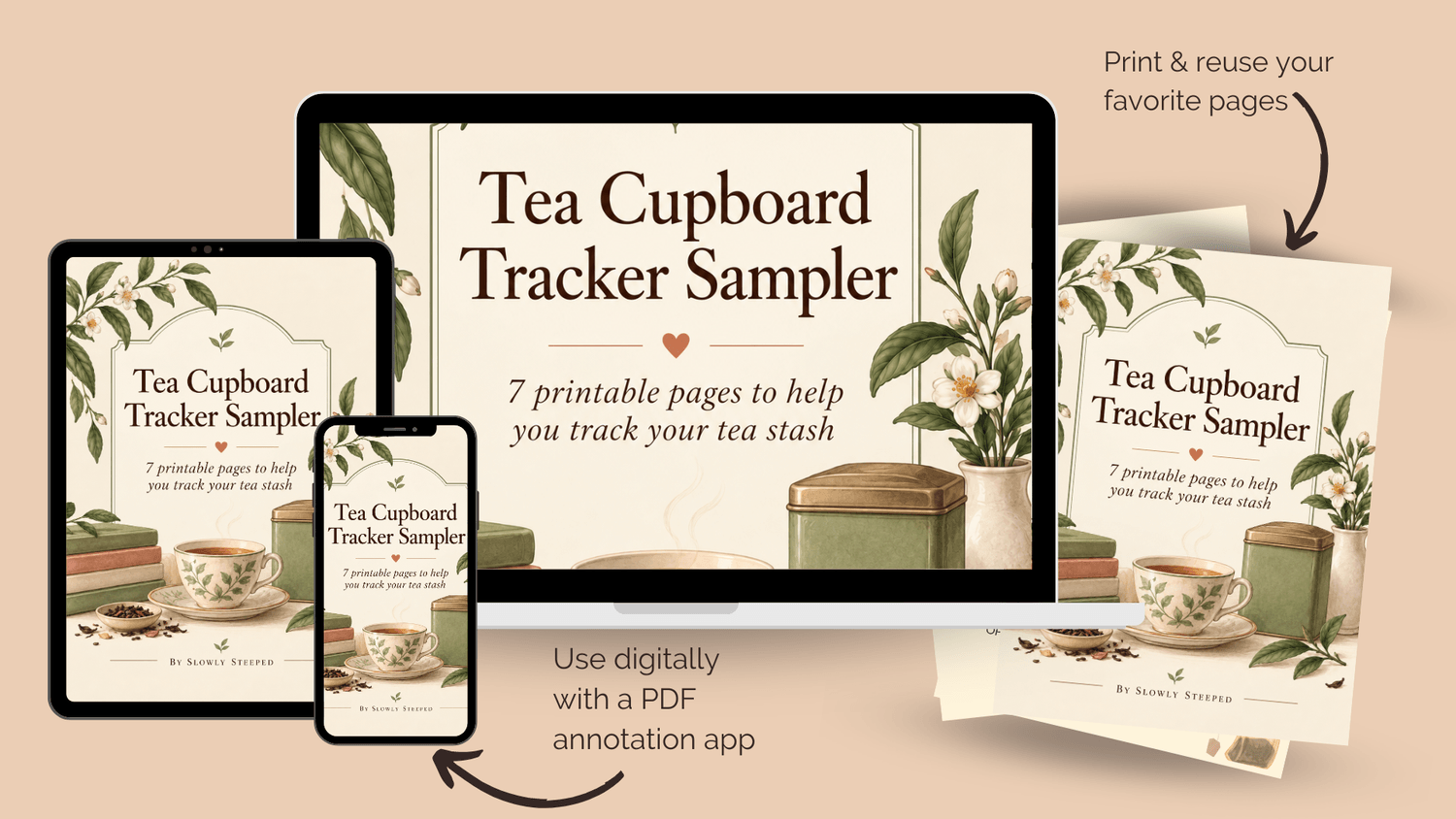
Download the free 7-page Tea Cupboard Tracker Sampler to take stock of the tea you own, see what’s already open, and decide what you want to finish next.
Tea guides, curious facts, everyday rituals, and thoughtful finds for people who simply enjoy a good cup.


Get Your Tea Cupboard Organized for Free
Download the free 7-page Tea Cupboard Tracker Sampler to take stock of the tea you own, see what’s already open, and decide what you want to finish next.
Created with ©systeme.io