
Matcha Explained: What the Different Styles and Labels Actually Mean
Shopping for matcha can get confusing fast.
One tin says ceremonial grade, another says culinary, and then you run into labels like Uji matcha, single-cultivar, latte matcha, and first harvest. Suddenly, choosing matcha feels a lot more complicated than it should.
So here's the useful part: there really are differences between types of matcha, but some of the labels on the package tell you much more than others.
And one of the most familiar labels isn't nearly as official as it sounds.
What Is Matcha?
Matcha starts with tea leaves grown under shade.
After harvest, the leaves are steamed and dried, but unlike many other green teas, they aren’t rolled.
At that stage, the tea is called tencha.
That’s what separates matcha from simply grinding regular green tea into a powder.
It belongs to the green tea family, but the way it’s grown and processed gives it its own identity. So if you’ve already read our guide to the types of green tea, think of matcha as one specific style within that bigger category.
Ceremonial Grade Explained
Let’s clear this one up first.
There isn’t a universal official grading system that defines terms like ceremonial, premium, café, and culinary the same way across matcha brands.
That means one company’s “ceremonial grade” matcha may be very different from another company’s.
The labels can still be useful, though.
A brand may use ceremonial for matcha it recommends drinking with just water, while culinary often points to matcha intended for baking, cooking, lattes, or other recipes.
So don’t assume two tins labeled “ceremonial grade” are automatically equal in quality or flavor.
Tencha is the tea used to make matcha. Once it’s finely ground, it becomes the bright green powder we know as matcha.
Matcha With Water
If you’re making matcha with just powder and water, look for one that the seller recommends for drinking on its own.
Because there’s no milk or sweetener involved, the flavor has to stand on its own too. You’ll usually want something smooth, balanced, and not overly bitter.
This is often where you’ll see the word ceremonial, but don’t rely on that label alone.
Check the description instead. Look for tasting notes, where the matcha comes from, and whether the seller recommends it for traditional preparation or usucha.
Those details will tell you a lot more about the matcha than one fancy word on the front of the packaging.
Matcha for Lattes
Matcha that's going into milk has a different job.
A very delicate matcha can disappear once you add milk, ice, sweetener, syrups, or other ingredients. For a latte, a matcha with a stronger green-tea character can actually make more sense.
That also means you don't automatically need the most expensive brand of matcha for your iced matcha latte.
Check whether the seller recommends it for lattes, rather than choosing by price or grade alone.
Matcha for Recipes
Then there's the matcha destined for cookies, cakes, ice cream, smoothies, sauces, and other recipes.
This is where you'll commonly see culinary matcha.
Again, culinary isn't an official grade. It's more useful to think of it as an intended-use label.
In a recipe, subtle differences can get buried under flour, sugar,
chocolate, milk, or other flavors.
Using an expensive matcha chosen for its delicate flavor may not give you much benefit once it goes into a cake batter.
For cooking and baking, look for matcha recommended for recipes, and compare package sizes and prices per gram.
Usucha and Koicha
Two other matcha terms you’ll come across are usucha and koicha.
They’re not different types of matcha. They’re two different ways of preparing it.
Usucha means “thin tea.” This is the style most people picture when they think of a bowl of matcha: powder whisked with water into a smooth, lighter drink.
Koicha means “thick tea.” It uses more matcha and less water, so the result is much richer and thicker instead of light and foamy.
Keep this in mind when shopping for matcha because some varieties are specifically recommended for koicha. Since koicha is so concentrated, bitterness or sharpness tends to stand out more.
Single Cultivars vs. Blends
Tea plants come in different cultivars, which are basically different varieties of the same plant. It’s a bit like comparing different grape varieties used for wine.
A single-cultivar matcha is made from just one cultivar, so you get a clearer sense of that variety’s flavor and character.
A blend combines teas from different cultivars or batches to create a certain flavor or keep the taste more consistent.
Neither one is automatically better.
Single-cultivar matcha, on the other hand, can be a fun way to notice how much the flavor can change from one tea plant variety to another.
A few names you may encounter include:
| Cultivar | What to Know |
|---|---|
| Yabukita | A widely grown Japanese tea cultivar known for a balanced character. |
| Okumidori | Often associated with a deeper green color, umami, and lower astringency. |
| Saemidori | Known for its bright color and often associated with sweetness and umami. |
| Samidori | A Kyoto cultivar that is particularly well suited to tencha and gyokuro production. |
But those are general patterns, not guarantees. Where the tea is grown, how it’s shaded and harvested, how it’s processed, and whether it’s blended can all affect the final flavor.
Where Matcha Comes From
You’ll also see place names like Uji and Nishio on matcha packages.
Uji, in Kyoto Prefecture, has a long history of producing tencha and matcha. Nishio, in Aichi Prefecture, is another well-known matcha-growing area.
You’ll also find matcha from places like Kagoshima and Shizuoka.
Where the matcha comes from can be useful to know, but it doesn’t tell the whole story.
Two matchas from the same region can still taste very different depending on the cultivar, farm, harvest, processing, and whether the tea was blended.
So if you see Uji or another region on the label, treat it as one helpful clue rather than the final word on quality or flavor.
How to Choose Matcha
Instead of trying to memorize a complicated matcha grading system that doesn't really exist, start with what you're making.
| If You Want To... | Look For... |
|---|---|
| Whisk matcha with water | Matcha specifically recommended for drinking straight or for usucha. |
| Make koicha | A matcha the producer recommends for thick tea. |
| Make matcha lattes | Matcha the seller recommends for mixing with milk. |
| Bake or cook with matcha | Matcha intended for culinary use or recipes. |
| Explore flavor differences | Single-cultivar matcha with the cultivar clearly listed. |
| Find a consistent everyday style | A well-described blend from a tea producer or tea house. |
And if the package only tells you CEREMONIAL GRADE in giant letters without telling you much else?
Keep reading the label.
Sources
1. Ministry of Agriculture, Forestry and Fisheries of Japan — Uji Tea
Resource: Uji Tea
Organization: Ministry of Agriculture, Forestry and Fisheries of Japan (MAFF)
Read the source → MAFF — Uji Tea
2. National Agriculture and Food Research Organization — Definition of Matcha
Resource: A Technical Report on the Definition of Matcha Is Published by ISO
Organization: National Agriculture and Food Research Organization (NARO), Institute of Fruit Tree and Tea Science
Read the source → NARO — Definition of Matcha
3. International Organization for Standardization — Matcha Tea Definition and Characteristics
Resource: ISO/TR 21380:2022 — Matcha Tea: Definition and Characteristics
Organization: International Organization for Standardization (ISO)
Read the source → ISO — Matcha Tea: Definition and Characteristics
4. Urasenke Konnichian — Usucha and Koicha Tea Procedures
Resource: Urasenke Chado Study Resources in English
Organization: Urasenke Konnichian
Read the source → Urasenke — Chado Study Resources
5. Food Science and Technology Research — Matcha Taste Study
Resource: Objective Evaluation of Astringent and Umami Taste Intensities of Matcha Using a Taste Sensor System
Organization: Japanese Society for Food Science and Technology; research conducted in part by scientists from NARO
Read the source → J-STAGE — Matcha Taste Study
6. Japanese Tea Education Database — Japanese Tea Cultivars
Resource: Japanese Tea Cultivar Database
Organization: Japan Tea Export Council / Japanese Tea Education Database
Read the sources → Japanese Tea Education Database — Yabukita · Saemidori · Samidori
7. National Agriculture and Food Research Organization — Japanese Tea Cultivar Research
Resource: Tea Cultivar Research and Handbook
Organization: National Agriculture and Food Research Organization (NARO)
Read the source → NARO — Tea Cultivar Handbook
8. Aichi Prefecture — Nishio Matcha
Resource: Nishio Matcha
Organization: Aichi Prefectural Government
Read the source → Aichi Prefecture — Nishio Matcha

Read This Next...
If you want to see where matcha fits into the bigger green tea picture, read Green Tea Guide: 6 Styles Worth Getting to Know next. It walks through several popular green tea styles, including sencha, genmaicha, Dragon Well, hojicha, and more, so you can see just how varied green tea can be.
Get Your Tea Cupboard Organized for Free
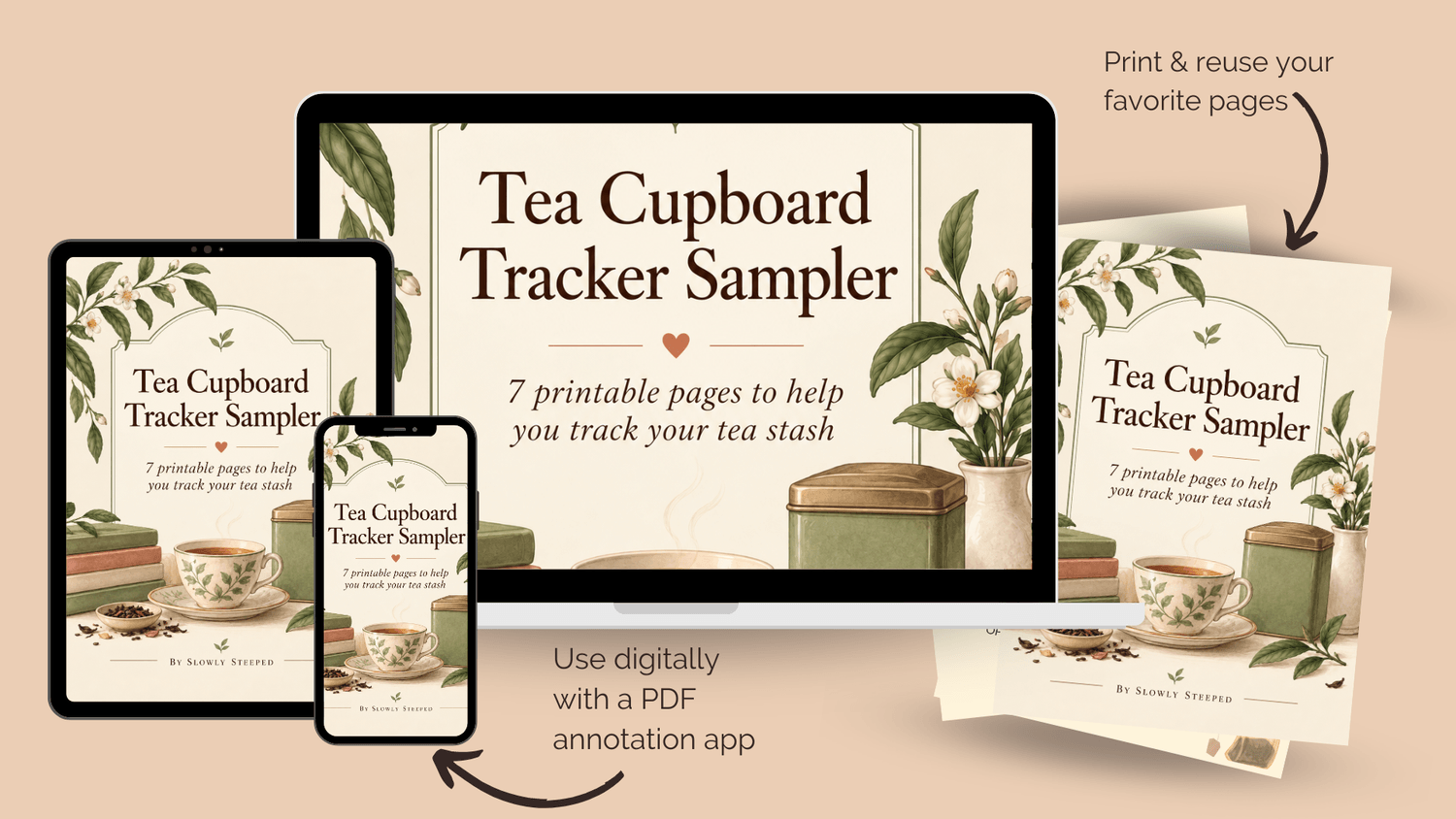
Download the free 7-page Tea Cupboard Tracker Sampler to take stock of the tea you own, see what’s already open, and decide what you want to finish next.
Tea guides, curious facts, everyday rituals, and thoughtful finds for people who simply enjoy a good cup.


Get Your Tea Cupboard Organized for Free
Download the free 7-page Tea Cupboard Tracker Sampler to take stock of the tea you own, see what’s already open, and decide what you want to finish next.
Created with ©systeme.io